
The mood around cash changes fast. When rates rise, people suddenly care what their savings account is paying. When rates fall, the conversation flips and the pressure to move money somewhere else picks up. In both environments, the real question is not simply where cash sits. It is what that cash is supposed to do for you.
That is why a sound cash reserve strategy starts with purpose before yield. Cash is not a side issue in a financial plan. It is the part of the plan that absorbs surprises, funds near-term spending, and helps keep long-term assets from being tapped at the wrong time. If your reserve is doing those jobs well, a changing rate environment becomes something to respond to thoughtfully, not something that forces rushed decisions.
Cash has a job to do
Most people think about cash as money that is waiting. In practice, good reserve cash is working all the time. It gives you room to handle a job change, a large deductible, a home repair, a tax payment, or a stretch of uneven income without putting the rest of your plan under stress. That function matters in every market, but it matters even more when rates and inflation are moving around.
On June 17, 2026, the Federal Reserve said it was maintaining the target range for the federal funds rate at 3.5% to 3.75% (Federal Reserve FOMC statement). That is a very different backdrop than the near-zero rate environment many households got used to earlier in the decade. Yet the lesson is not that cash should always be maximized when rates are higher. The lesson is that cash should be managed with intention because the return on cash is now material enough to notice, while the opportunity cost of idle cash still exists. (federalreserve.gov)
That distinction matters. If cash is too thin, every unexpected bill becomes a disruption. If cash is too heavy, too much of the balance sheet may sit in assets that are safe and liquid but not designed for long-term growth. The right answer is usually not a single number. It is a structure.
Separate liquidity from return
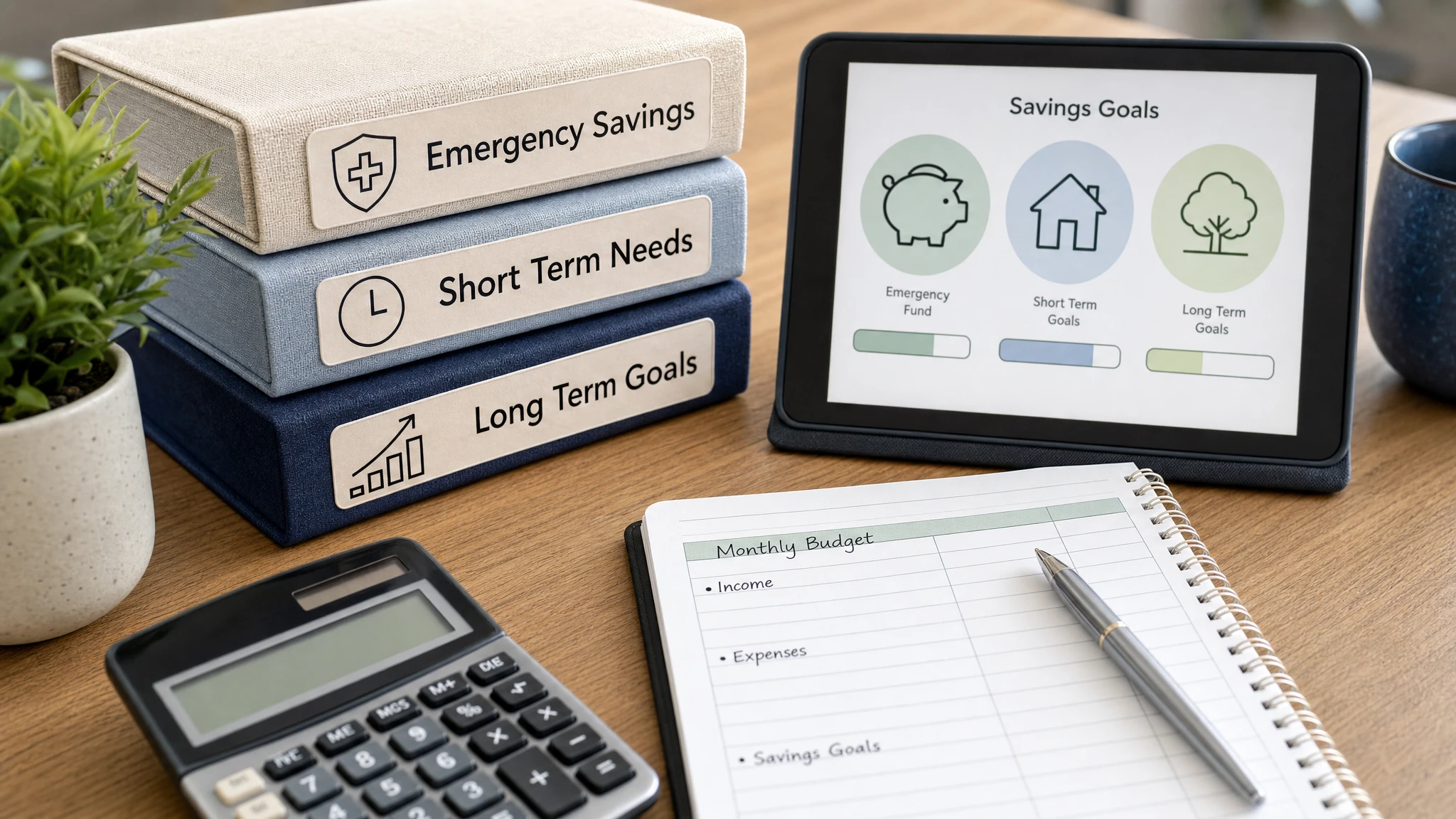
One of the most useful shifts a household can make is to stop treating all cash as one bucket. Emergency liquidity is different from near-term spending. A reserve for annual property taxes is different from money set aside for a kitchen remodel next spring. Money that may need to be touched tomorrow should not be managed the same way as money that is unlikely to be needed for twelve months.
This is where many cash decisions go sideways. People hear that rates are attractive and move all of their reserve money into whatever appears to pay the most. Or they stay in a low-paying checking or savings account because it is familiar, even though much of that cash is not truly transactional. In both cases, the problem is the same. The cash was not matched to its job.
A practical cash reserve strategy often starts with a core operating layer. That is the money for monthly bills, autopay activity, and a modest cushion against normal variability. It usually needs immediate access and very little complexity. From there, a second layer can hold true emergency reserves, where safety and ready access still come first but daily transaction convenience matters a bit less. A third layer can cover known spending within the next year or two, where some households may be comfortable using vehicles that still emphasize principal stability and liquidity but do not need to function like a checking account.
When you separate those roles, rate changes become easier to interpret. You do not need every dollar to chase the same outcome. Some dollars need convenience. Some need resilience. Some need a reasonable return while they wait for a planned use date.
Inflation changes the conversation, but not the mission
Cash has a frustrating feature. It protects nominal stability, but inflation can quietly erode its purchasing power. That is why a cash reserve strategy should not be built around fear alone. It should be built around the time horizon for the money.
The latest Consumer Price Index release, published June 10, 2026 for May data, showed headline CPI up 4.2% over the prior 12 months, while the index excluding food and energy rose 2.9% (BLS CPI report for May 2026). That is a useful reminder that inflation pressure does not move in a straight line and that the cost of everyday living can still feel stubborn even when broader policy rates have come down from prior highs. (bls.gov)
Still, inflation is not a reason to make your emergency fund act like a growth portfolio. Reserve cash is not there to win a long-term return race. It is there to preserve flexibility when life gets expensive or unpredictable. The better response to inflation is usually not to eliminate cash, but to be more precise about how much cash belongs in each time bucket and whether each bucket is sitting in the most appropriate place.
This is also why the size of a reserve should reflect the household, not a generic rule pulled from a headline. Someone with stable salary income, low fixed expenses, and strong benefits may reasonably hold a different reserve than a self-employed household, a single-income family, or a retiree taking regular portfolio withdrawals. The mission stays the same, but the capacity the reserve needs to provide can vary meaningfully.
Higher rates do not mean your bank is doing the work for you
Many people assume that when the Fed raises or maintains higher short-term rates, ordinary bank accounts automatically become competitive. In reality, the pass-through is uneven. As of May 18, 2026, the FDIC reported a national average savings rate of 0.38%, a national average money market deposit rate of 0.57%, and a national average 12-month CD rate of 1.55% (FDIC National Rates and Rate Caps). In other words, the broader rate environment may improve cash yields generally, but that does not guarantee that the account you have had for years is doing much for you. (fdic.gov)
That creates a common planning mistake. Households either assume cash is finally earning enough everywhere and stop paying attention, or they react by stretching for yield in ways that undermine access, insurance limits, tax awareness, or simplicity. A better path is usually to review where reserve cash sits and ask a few plain questions. Is this money accessible enough for its job? Is principal stability the priority here? Is the administrative burden worth the incremental yield? Does the account structure fit how quickly this money may need to move?
Those questions matter more than the headline rate alone. A cash reserve strategy that looks efficient on paper can fail in practice if it adds friction right when the money is needed.
The hidden risk of reaching for yield
When rates are changing, people understandably become more rate-sensitive. That can be healthy. It can also lead to overcorrection. The hidden risk is not just earning too little. It is treating reserve cash like an asset class that should always be optimized to the last basis point.
That mindset can cause households to lock up money they may need sooner than expected, move emergency funds into places they do not fully understand, or keep shifting balances every few months in response to the latest rate table. The financial gain from those moves is often smaller than expected, especially after taxes, transfer delays, behavioral friction, and the simple cost of complexity.
Reserve cash should lower stress, not create another management project. If an account pays somewhat more but is slow to access, hard to link, awkward to monitor, or inconsistent with how you actually use money, the tradeoff may not be worth it for your most liquid dollars. Not every dollar needs maximum yield. Some dollars need maximum usefulness.
This is especially important for retirees and near-retirees. When portfolio withdrawals are funding living expenses, cash is not only about emergencies. It can also serve as a buffer between spending needs and market volatility. That does not eliminate investment risk, but it can reduce the chance that short-term spending must be funded by selling long-term assets during a weak stretch. If you want to take that thinking further, it connects naturally with our piece on how to stress test your retirement plan before markets test it.
When rates fall, convenience matters again
A declining rate environment changes behavior in a different way. When cash yields start to drift lower, people begin questioning how much reserve they really need. Some of that scrutiny is healthy. It can prompt a useful review of cash that has piled up without a clear purpose. But lower yields do not erase the reason reserves exist.
In fact, falling rates can be a good moment to tighten up your cash structure. If yields are compressing, the spread between accounts may matter less than it did at the peak. That can make simplicity, access, and alignment more important again. It can also be a reminder to move excess cash beyond your true reserve needs toward other goals if that fits your plan, your time horizon, and your risk tolerance.
This is where a midyear review can be valuable. A reserve that made sense when expenses, income, and rates looked one way may need adjustment when those variables shift. If you are already doing a broader midyear financial check-in, cash positioning deserves its own conversation, not just a glance at the account balance.
A reserve policy that can adapt
The most effective households usually do not manage cash by instinct alone. They have a simple policy, even if they have never written it down formally. They know roughly how much they want available immediately, how much is reserved for true surprises, and how much is earmarked for near-term spending. They know what would cause them to build that reserve higher or let it come down. They review it when income changes, when family obligations shift, when large expenses move onto the horizon, or when retirement draws closer.
That kind of policy does not need to be complicated. It just needs to be deliberate. Your cash reserve strategy should adapt to the rate environment without becoming captive to it. If rates are attractive, that is a bonus, not the purpose. If rates decline, that is a reason to review, not a reason to abandon liquidity discipline.
The real goal is confidence in function. Cash should be ready when you need it, stable when markets are unsettled, and right-sized for the life you are actually living. When that is true, rate changes become relevant, but not destabilizing.
The takeaway
Your reserve cash should do three quiet but important things at once. It should protect your day-to-day flexibility, support known spending needs, and reduce the chance that a short-term disruption turns into a long-term financial mistake. In a changing rate environment, the right response is usually not to obsess over one account or one yield. It is to make sure each cash dollar has a clear assignment.
Click the button below to schedule a time to chat.
Appendix: Sources
Federal Reserve FOMC statement, June 17, 2026 (federalreserve.gov)